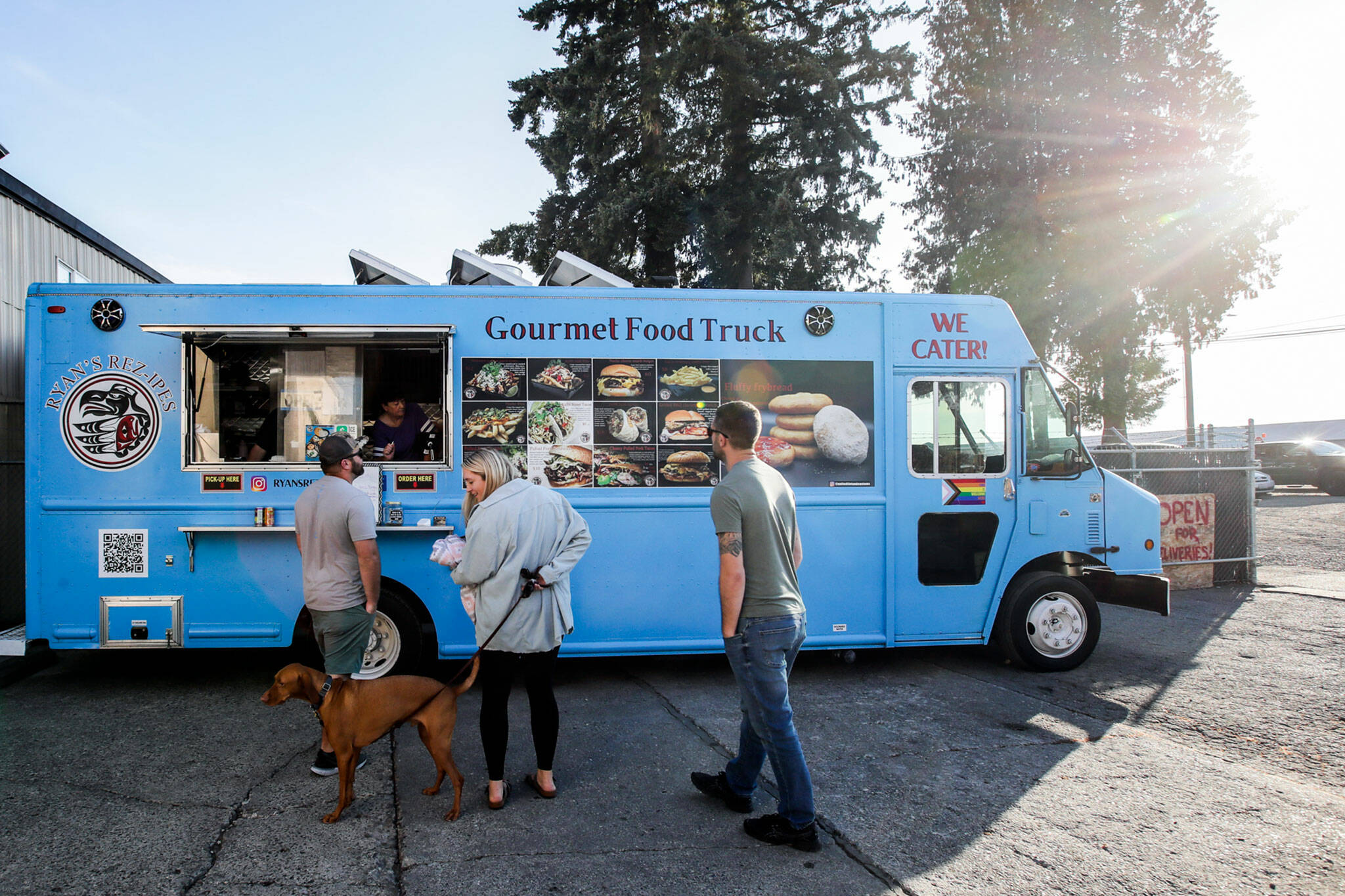
You’re strolling along in the city park and can feel your stomach growling. It’s been awhile since you’ve eaten last, but there’s no restaurants in sight. Just then- you see exactly what you need. A gourmet food truck full of delicious food!
Enjoying delicacies from food trucks is much different than owning one. A food truck is a big commitment. Unlike driving for rideshare or food delivery services, you can’t turn on an app whenever you feel like working. This takes discipline and dedication to the next level. To be truly profitable, you must work long hours and schedule your truck for events that you know will have a good turnout.
Buying and running a gourmet food truck is not for the weak. With that being said, if you love to cook and have always wanted to own a restaurant, this is the perfect beginning step! You can create your name, brand, and menu and expose it to the public to see how successful it is. Many successful gourmet food trucks go on to expand their number of food trucks, and even open their own restaurants.
Step one: Do your research. You will want to know all about your city’s rules and regulations when it comes to food trucks. You need to know where you can park your truck to sell, busy streets where commuters can become customers, and existing gourmet food truck ideas to ensure that yours stands out.
Step two: Choose your concept. You want your idea to be unique, memorable, and attention-grabbing to entice people to stop and try your food. This is the time that you will come up with your name and brand. A good start to come up with ideas is to incorporate some of your unique attributes and aspects of your city.

Step three: Draw up your business plan. If you need a loan to start this business, you will need a business plan to present to the bank! There are multiple sections that need to be addressed within your plan:
- An Executive Summary
- A Company Description
- A Market Analysis
- An Organization and Management Plan
- A Service or Product Line Description
- Marketing and Sales Strategies
- A Funding Request
- A Financial Projection
- An Appendix
If you find yourself lost and unsure where to start, you can hire someone to assist you with writing your business plan. This is an example of an easy one-page business plan:

Step four: Get the money. This step is easier said than done. To start making money, you need to invest money in your business. Alternatively to a loan, you can get the money you need through business credit cards, community sponsors, and personal investors. You can also try crowdfunding which allows many people to donate small amounts of money to help business owners achieve their financial goals.
Step five: Apply for licenses and permits. Like a brick-and-mortar restaurant, you will need to meet specific criteria and standards to own and operate a food truck. This can vary from state-to-state, but you typically will need these in every state:
- Business license
- Employee Identification Number
- Food Service License
- Employee Health Permit
- Mobile Food Facility Permit
- Zoning and Parking Permit
There are more licenses and permits depending on the state, so here is a more detailed list of potential paperwork you will need.
Step six: Once the above steps are completed, it’s time to choose your food truck! You will need to decide between a used or new truck, lease or buy, and the customizations you want for your business. It’s important to note that insurance for your truck is a good idea to cover physical damage or liabilities.
Step seven: Fill your truck with equipment and supplies. There is a lot of equipment that goes with a food truck that you may not even think of that will make your life much easier. If you aren’t sure where to begin, here is a good starting point:
- Cooking Equipment- Grills, microwaves, toasters, ranges
- Warming and Holding Equipment- Food warmers, soup kettles, fry dump stations
- Food Prep Equipment- Work tables, chef knives, cutting boards, cookware, kitchen utensils, kitchen thermometers, serving spoons
- Serving Equipment- Take-out supplies, disposable gloves, food trays, napkins, cups, cutlery
- Refrigeration Equipment- Prep tables, refrigerators, ice machines
- Miscellaneous Equipment- Hand Sinks, compartment sinks, floor mats, sanitizing chemicals, trash cans, recycling bins, floorcare products
Step eight: Invest in a Point of Sale (POS) system. Now that your food truck is financed and set up, your customers need a way to pay you! You could run a cash only truck, but the downfall of this is that many people no longer carry cash. The most popular POS system for food trucks is the Toast POS system, which allows customers to place mobile orders with multiple payment options. This makes for easy peasy paperless transactions.

Step nine: Let everyone know you’re open for business! You want to catch people’s eye and draw them to you. Whatever logo you choose, ensure it is vibrant and easy to see from a distance. You can create a website and social media pages for customers to check out and follow; There’s nothing more exciting than a chase!

Another way to increase your exposure is to sign up for local food truck festivals. This will make people more familiar with your business and encourage word-of-mouth.
Tips
Offer delivery for your food. You may think to yourself “But it’s a food truck!” You’re right! But signing up your food truck for doordash and grubhub will open you up to the people who want your food, but are enjoying a night-in and don’t want to come to you.
Enroll yourself in a food truck finder. There are various apps through the google or apple store that allow consumers to download and look for food trucks around their area. Imagine the amount of new customers you could receive when more people know you’re there!
A great last tip is to build a relationship with your regulars. This could be people that frequent your truck once, twice, maybe even three times a week! Listen to what they like and what they don’t, and what they think you could change to improve your business. Afterall, “The customer is always right!”