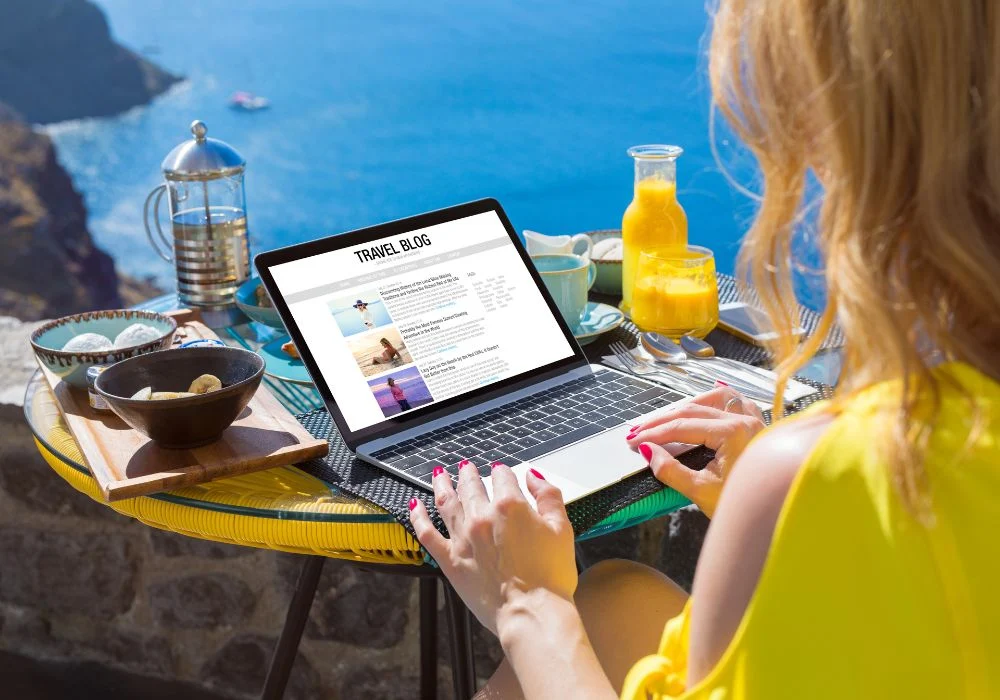
When you decide to go on vacation, what’s the first thing you do? The answer is probably research! Before you take the dive on purchasing plane tickets and a cozy airbnb, you want to get the scoop on where you’re going. That’s where travel bloggers come into play.
The difference of travel blogging as opposed to many other side hustles is that you don’t necessarily get paid by the hour. You don’t clock in, get your work done, and clock out. Instead, you take the time doing research and writing, and publish it on your site. From there, you can get paid through a few different avenues. The typical travel blogger gets paid $1000 a month after their first year of blogging, and can eventually get paid upwards of $3000 per month or more with experience.
This can be a difficult side hustle for someone that hasn’t really traveled. Many readers want to learn about real-life experiences from relatable people, so if you haven’t done much exploration, your readers may not connect with you. If you want to write about travel but haven’t done much yourself, you could still pull off a successful blog with enough reading, research, and relatability.
Step one: Pick your niche. Plenty of people go for general travel. Sure, you can get more potential readers if you have a broad topic, but honing in on one area of expertise is sure to bring in those with the same interests. This could be all RV travel, focusing on a specific location, or where all the best hiking spots are across the world. Whatever your focus is, there is a niche out there for everyone.
Step two: Decide on a blog site. There are countless sites where you can begin your blog, so you will have to choose what’s best for you and your goals. Here’s a site that goes into depth about the various sites and their pros and cons.
Step three: Invest in yourself and your blog. They say to make money, you have to spend money. You should be putting a little money into your blog to increase your revenue. This could be hiring designers or co-editors, anything that enhances your readers’ experiences. You should also be reading up on important aspects such as marketing, entrepreneurship, and business, as running your own blog is essentially running your own business!
Take a look at an example of a payout from a blog:

Step four: Make your content relatable. As mentioned before, most people want someone they can relate to. People might see an expensive trip to a luxurious location and think, “Wow! That’s beautiful! Too bad I can’t afford to go there.” You want to be authentic and genuine, a real “people’s person.” At the end of the day, you want people to know exactly where to go when they want real information with an attainable goal from someone they can trust to give it to them straight. It may be appealing for you to allow sponsors to pay for expensive trips for you to exotic locations, but try to minimize if not avoid these all together.
Step five: Sell products. This is not something that every travel blogger does. If you don’t sell any sort of product, your revenue comes purely from your hard work of traveling, research, photography, and writing. By selling products, whether it be sweatshirts or travel guides, you can enjoy making revenue while you are taking some time for yourself.
Step six: Make connections. Nothing says business like exposure. Making time to attend conferences outside of travel is a great way to meet people and be their own personal travel expert. Imagine you meet an important leader of a specific community and they know nothing about travel, but they befriend you. Just like that, you are their go-to travel guru on all their sites!

Step seven: Be consistent. Your readers will want regular content from you. Try to write a blog post a few times a week as opposed to once a month!
Tips
Signing up for affiliate programs is a great way to generate additional income for your blog. Keep in mind, though, that this must be done tastefully to keep your reputation intact. Let’s say that you chose RV travel for your niche. While writing on one of your blogs about RV travel, you could mention a certain product that you found to be helpful for you and use the affiliate link. When readers click on this link and purchase the item, you will receive a percentage of the sale. Be sure that the products connect to your niche and that you yourself would/do use them. This is an example of earning income from using affiliate links:

Another idea is to make a youtube channel along with your blog. Reading about a location can be fun, but it’s even better to see something with your own eyes! Once your youtube channel is up and running, you can work on monetizing it through ads and sponsors.
Still not enough for you? Try working as a virtual assistant for an established travel blogger. Not only will this provide you with a little income while getting your own blog up and running, but it will also allow you to learn from a professional.